How to Teach a Dog to Spin in Both Directions
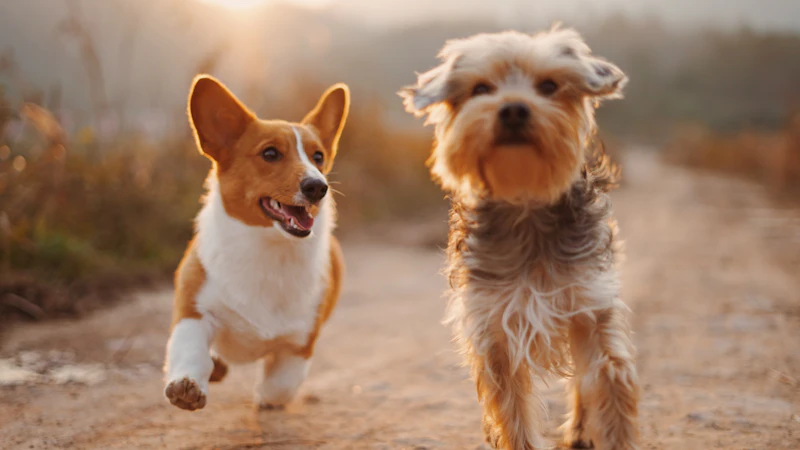
Teaching your dog new tricks isn't just about showing off their cleverness; it's a powerful way to engage their minds, build confidence, and strengthen the incredible bond you share. The "spin" and "twist" are fantastic tricks that offer both mental stimulation and a gentle physical workout, perfect for dogs of all ages and sizes. Using science-based, force-free methods, we'll guide you through teaching your dog to gracefully turn in both directions, making learning a fun and rewarding experience for both of you.
Why Teach Your Dog to Spin and Twist?
Beyond the undeniable cuteness factor, teaching your dog to spin and twist offers a wealth of benefits rooted in positive reinforcement and canine cognition. Firstly, it provides excellent mental stimulation. Dogs, much like humans, thrive on learning and problem-solving. Mastering a new trick engages their brains, helps prevent boredom, and can even reduce undesirable behaviors that stem from a lack of mental enrichment. It's a fantastic way to burn mental energy, especially on days when physical exercise might be limited due to weather or your dog's age.
Secondly, these tricks enhance your dog's body awareness and coordination. To perform a spin or twist, your dog needs to understand how to move their body in a specific, controlled way. This can improve their balance and agility, which is beneficial for overall physical health and can even help prevent injuries. It’s a low-impact exercise that can be done in small spaces, making it accessible for almost any dog.
Finally, and perhaps most importantly, teaching these tricks strengthens the communication and bond between you and your dog. Force-free training relies on clear cues, positive reinforcement, and mutual understanding. As your dog learns to interpret your hand signals and verbal cues, and you learn to read their body language and understand their learning style, your relationship deepens. Each successful spin or twist becomes a shared victory, building trust and making your dog feel like a valued partner in the training process.
Essential Tools and Setting Up for Success
Before you begin, gathering the right tools and creating an optimal learning environment will set you and your dog up for success. Remember, force-free training is all about making the experience enjoyable and stress-free for your canine companion.
- High-Value Treats: These are your primary motivators. Choose small, soft, pea-sized treats that your dog absolutely loves and can swallow quickly. This ensures they don't get distracted by chewing and can immediately focus on the next step. Cooked chicken, cheese, or specialized training treats often work well.
- A Quiet, Low-Distraction Environment: Start training in a familiar space where your dog feels comfortable and there are minimal distractions. Your living room, a quiet hallway, or a fenced backyard can be ideal. Avoid areas with other pets, loud noises, or interesting smells that might pull your dog's attention away from you.
- Short Training Sessions: Dogs learn best in short, frequent bursts. Aim for 2-5 minute sessions, two to three times a day. Ending on a positive note, even if it's just after one successful spin, keeps your dog eager for the next session.
- A Clicker (Optional but Recommended): A clicker is a precise marker that tells your dog the exact moment they performed the desired behavior. If you use a clicker, remember to "charge" it first by pairing the click with a treat multiple times before starting the trick. If you don't use a clicker, a verbal marker like "Yes!" or "Good!" works just as well.
- Non-Slip Surface: Ensure your dog has good footing. Carpets, rugs, or non-slip mats are preferable to slick floors, especially for dogs who might be hesitant to turn or older dogs.
Approach each session with patience, enthusiasm, and a positive attitude. Your dog will pick up on your energy, making the learning process more enjoyable for both of you.
Teaching the "Spin" (Counter-Clockwise) with Luring
We'll start with teaching the "spin," which for consistency, we'll define as a counter-clockwise turn. Luring is an excellent force-free method that uses a treat to guide your dog into the desired position or movement. This allows your dog to learn without any physical manipulation.
- Get Your Dog's Attention and Position: Start with your dog standing in front of you. Hold a high-value treat between your thumb and forefinger, close to their nose.
- Lure the Turn: Slowly move the treat in a circular motion, starting from their nose, sweeping it over their head, and around their body in a counter-clockwise direction. Your goal is to get their head to follow the treat, which will naturally encourage their body to follow suit. Keep the treat low enough that they don't jump up for it, but high enough to keep their nose engaged.
- Mark and Reward the Full Turn: As your dog completes a full 360-degree turn and ends up back in the starting position facing you, immediately mark the behavior with your clicker or verbal marker ("Yes!"), and then give them the treat. It's crucial that the mark happens at the peak of the desired action.
- Repeat and Add the Verbal Cue: Practice steps 2 and 3 several times. Once your dog is consistently following the lure for a full 360-degree turn, start adding your verbal cue. Just as you begin the luring motion, say "Spin." Repeat "Spin," lure, mark, and reward.
- Fade the Lure: Gradually make your lure motion smaller. Instead of a full circle with the treat, make it a smaller hand motion, then just a finger motion, until eventually, you can just give the "Spin" verbal cue, and your dog performs the trick with a minimal hand signal or none at all. Always remember to mark and reward generously for every successful attempt, especially during this fading stage.
If your dog struggles to complete the full turn, break it down. Lure for just a quarter turn, mark, and reward. Then lure for a half turn, mark, and reward, slowly building up to the full circle. Patience is key!
Teaching the "Twist" (Clockwise) with Luring
Once your dog has confidently mastered the "spin" in one direction, teaching the "twist" (the clockwise turn) will be much easier, as they already understand the concept of turning on command. The process is identical, but with a crucial difference: the direction of the lure and the verbal cue.
- New Direction, Same Setup: Start with your dog standing in front of you, ready to learn. Hold your treat ready.
- Lure in the Opposite Direction: This time, move the treat in a circular motion, starting from their nose, sweeping it over their head, and around their body in a clockwise direction. Ensure your dog understands this is a different movement than the "spin."
- Mark and Reward the Full Turn: Just as with the spin, as your dog completes a full 360-degree clockwise turn and ends up back in the starting position, immediately mark the behavior with your clicker or verbal marker ("Yes!"), and then give them the treat.
- Repeat and Add the Distinct Verbal Cue: Practice steps 2 and 3 until your dog is consistently following the clockwise lure. Now, introduce your new verbal cue. As you begin the clockwise luring motion, say "Twist" (or "Other Spin," or whatever distinct word you choose). It's incredibly important to use a different verbal cue than "Spin" to avoid confusion for your dog. Repeat "Twist," lure, mark, and reward.
- Fade the Lure for "Twist": Just as you did with "spin," gradually reduce the size of your luring motion for "twist." Start with a large hand motion, then a smaller one, then just a finger, until your dog performs the "Twist" on the verbal cue alone, with perhaps a subtle hand signal. Continue to mark and reward enthusiastically for every correct turn.
Remember to keep the training sessions for "twist" separate from "spin" initially, to help your dog differentiate between the two commands. Once they are solid on both individually, you can start practicing them in quick succession.
Refining, Generalizing, and Troubleshooting
Once your dog understands both "spin" and "twist," it's time to refine their performance and ensure they can perform the tricks reliably in various situations. This process is called generalization and is a vital part of true mastery.
- Practice in Different Environments: Start practicing in slightly more distracting environments – another room in your house, your yard, or a quiet park. Gradually increase the level of distraction. This teaches your dog that "spin" and "twist" mean the same thing, no matter where they are.
- Vary Your Rewards: While high-value treats are great for initial learning, start to vary your rewards. Incorporate praise, gentle petting, or a quick game with a favorite toy. This helps prevent your dog from only working for food and keeps them engaged.
- Add Distance and Duration: Once your dog is consistent, try giving the cue when you're a few steps away. You can also work on having them hold the "spin" or "twist" for a moment before the reward, though for these specific tricks, a quick execution is usually the goal.
- Combine with Other Tricks: Integrate "spin" and "twist" into sequences with other learned behaviors. For example, "Sit, Spin, Down, Twist, Stay." This adds complexity and mental challenge.
- Troubleshooting Common Issues:
- Dog isn't following the lure: Ensure your treats are high-value enough. Try a different treat. Make sure your lure motion is smooth and clear, keeping the treat close to their nose.
- Dog is jumping or rearing: Your lure is too high. Keep the treat lower to the ground, guiding their head in a horizontal circle.
- Dog is confused between "spin" and "twist": Go back to basics. Practice each trick separately in different sessions. Ensure your verbal cues are distinct and your hand signals are clear and different for each direction.
- Dog loses interest: Your sessions might be too long, or the treats aren't exciting enough. Keep sessions short and fun, and always end on a positive note. Take a break and try again later.
Always watch your dog's body language. If they show signs of stress, frustration, or disinterest (yawning, lip-licking, looking away, sniffing the ground), it's time for a break. End the session, even if it's after just one successful attempt, and come back to it later with renewed energy. The goal is always to make training a positive and enriching experience for your best friend.
Science-Based Training — Brain Training for Dogs →
Frequently Asked Questions
This usually means your lure is too high. Try to keep the treat much closer to the ground, guiding your dog's nose in a low, horizontal circle. This encourages them to pivot their body rather than reaching up.
First, ensure your verbal cues are very distinct (e.g., "Spin" and "Twist" not "Spin Left" and "Spin Right"). Practice each trick separately in different sessions until they are solid individually, then gradually introduce practicing them back-to-back.
The time frame varies greatly depending on the dog's individual learning style, your consistency, and the quality of your rewards. Some dogs pick it up in a few short sessions over a day or two, while others might take a week or more of consistent practice.