The Most Common Dog Training Mistakes and How to Fix Them
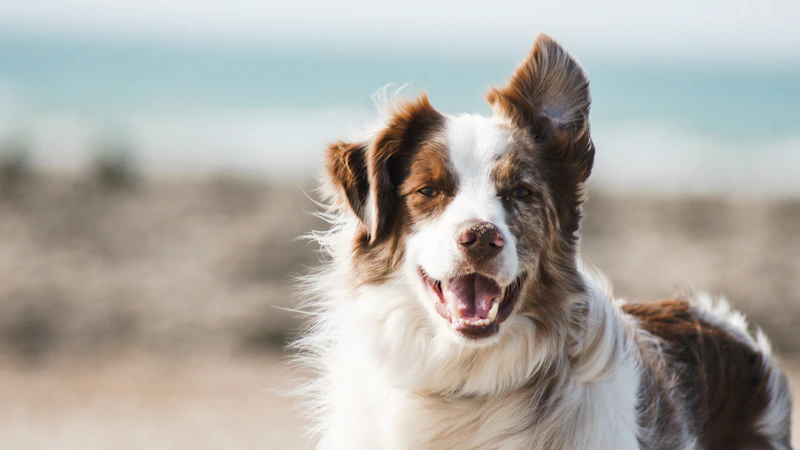
Embarking on a training journey with your dog is one of the most rewarding experiences, building a stronger bond and fostering clear communication. However, even the most dedicated dog owners can inadvertently fall into common training traps that slow progress or even create new challenges. At DogTrainingHQ, we believe in a science-based, force-free approach, understanding that mistakes are part of the learning process for both ends of the leash. By identifying and addressing these common missteps, you can accelerate your dog's learning, reduce frustration, and ensure a positive, joyful training experience for everyone.
Mistake 1: Poor Timing of Rewards and Feedback
One of the most fundamental principles of effective dog training is timing. Dogs live in the moment, and their ability to connect an action with its consequence is incredibly short. If you reward your dog even a few seconds too late, they might associate the reward with whatever they were doing after the desired behavior, rather than the behavior itself. Similarly, if you're trying to interrupt an unwanted behavior, waiting too long means the behavior has already been reinforced by its natural consequence (e.g., getting to chew the shoe).
The science behind this is operant conditioning: behaviors that are immediately followed by a desirable consequence are more likely to be repeated. Conversely, behaviors that lead to no reinforcement, or an immediate redirection, are less likely to continue. Poor timing leads to confusion for your dog, making it harder for them to understand what you want.
How to Fix It:
- Use a Marker: A clicker or a consistent verbal marker like "Yes!" or "Good!" acts as a precise signal to your dog that "that exact thing you just did earned you a reward." Deliver the marker at the exact moment your dog performs the desired behavior.
- Follow Immediately with a Reward: The marker is then immediately followed by a high-value treat, toy, or praise. This two-step process (marker then reward) bridges the gap between the behavior and the physical reward.
- Practice Timing Drills: Try rewarding simple actions like your dog looking at you, or sitting for a split second, focusing only on your timing. The faster and more precise you are, the clearer the communication.
- Proactive Intervention: For unwanted behaviors, aim to interrupt before the behavior fully manifests. For example, if your dog is about to jump, redirect them to a "sit" cue before their paws leave the ground.
Mistake 2: Inconsistent Expectations and Training
Imagine if your boss told you one set of rules on Monday, another on Tuesday, and then your colleague had completely different expectations for the same task. You'd be confused and frustrated! Dogs feel the same way when faced with inconsistent expectations from their human family. If "sit" means one thing to one person and something slightly different to another, or if jumping on guests is sometimes allowed and sometimes not, your dog struggles to understand the rules of the game.
Inconsistency also applies to your training schedule. Sporadic, long training sessions are often less effective than short, frequent ones. Dogs learn best through repetition and predictability. Lack of consistency leads to slower learning, frustration for both dog and owner, and behaviors that are not reliably performed.
How to Fix It:
- Family Meeting: Gather everyone involved in your dog's care. Agree on consistent cues (e.g., "sit" not "sit down" or "sit please"), desired behaviors for common scenarios (e.g., greeting guests politely, not begging at the table), and what rewards will be used.
- Generalize Behaviors: Once your dog understands a behavior in a quiet environment, practice it in different locations, with varying distractions, and with different family members. This helps your dog understand that "sit" means "sit" everywhere, not just in the living room.
- Short, Frequent Sessions: Aim for 3-5 short training sessions (5-10 minutes each) throughout the day, rather than one long, exhausting session. This keeps training fun and prevents mental fatigue.
- Management is Key: While your dog is learning, manage their environment to prevent opportunities for mistakes. Use gates, leashes, or crating to prevent unwanted behaviors like counter surfing or chewing inappropriate items.
Mistake 3: Using Low-Value or Predictable Motivation
Dogs, like all animals, are motivated to repeat behaviors that lead to desirable outcomes. If your dog isn't performing a cue, it's rarely because they're being "stubborn" or "disobedient." More often, it's because the motivation you're offering isn't valuable enough to them in that particular moment, or it's become so predictable that it's lost its appeal.
Many owners use the same dry kibble for every reward, regardless of the difficulty of the task or the level of distraction. While kibble might work for easy tasks in a quiet room, it's unlikely to compete with the allure of a squirrel or a new person at the door. Understanding your dog's individual motivators and varying your rewards is crucial for engagement and progress.
How to Fix It:
- Create a Reward Hierarchy: Experiment to discover what truly motivates your dog. This might include:
- High-value food: Cooked chicken, cheese, hot dogs, liverwurst.
- Medium-value food: Store-bought training treats, kibble (for easy tasks).
- High-value toys: A favorite squeaky toy, a ball for fetch.
- Real-life rewards: Access to sniffing, going outside, greeting a friendly person, playing tug.
- Vary Your Rewards: Don't always use the same treat. Keep your dog guessing and excited by rotating different high-value treats and toys.
- Match Reward Value to Task Difficulty: Use your highest value rewards for new, difficult, or highly distracting situations. Use lower value rewards for well-known behaviors in calm environments.
- Utilize Real-Life Rewards: Use the Premack Principle (also known as "Grandma's Rule"). If your dog wants to go outside, ask for a "sit" first. If they want to greet someone, ask for "four on the floor" first. The desired activity becomes the reward.
Mistake 4: Unrealistic Expectations and Frustration
It's easy to fall into the trap of comparing your dog's progress to others you see online or at the dog park. This can lead to unrealistic expectations, frustration, and impatience when your dog doesn't "get it" as quickly as you'd hoped. Remember, every dog is an individual with their own learning pace, personality, and past experiences. Learning is not a linear process; there will be good days and challenging days.
Getting frustrated with your dog not only makes training unpleasant for both of you but can also damage your relationship. Dogs don't learn out of spite or to intentionally annoy you. If they're struggling, it's usually due to a lack of understanding, insufficient motivation, or the task being too difficult.
How to Fix It:
- Break Down Behaviors: If your dog is struggling, simplify the task. Break it down into tiny, achievable steps. For example, for a "down," start by rewarding a nose-to-the-floor movement, then a crouch, then a full down.
- Celebrate Small Wins: Reward approximations of the desired behavior. Every step in the right direction is progress! This builds confidence in your dog and keeps you motivated.
- Patience and Empathy: Approach training with a mindset of understanding and compassion. Your dog is doing their best to understand a foreign language (ours!).
- Manage Your Own Emotions: If you feel frustration bubbling up, take a break. End the session on a positive note with an easy, successful command, and come back to the challenging behavior later when you're both refreshed.
- Seek Professional Guidance: Don't hesitate to consult a certified force-free dog trainer or behavior consultant. They can provide personalized advice, identify specific roadblocks, and offer strategies tailored to your dog's needs.
Mistake 5: Focusing on "Fixing" Problems Rather Than Teaching Solutions
A very common mistake, especially for those new to force-free training, is to focus solely on stopping an unwanted behavior without teaching the dog what to do instead. For example, an owner might constantly tell their dog "no" when they jump, but never explicitly teach them how to greet politely with "four on the floor." Dogs are always communicating and will choose the behavior that works best for them to get what they want (attention, access, relief from discomfort).
Simply stopping a behavior without providing an acceptable alternative leaves a void. The dog might stop the unwanted behavior for a moment, but without a clear, reinforced alternative, they are likely to try the original behavior again or develop a different, potentially worse, unwanted behavior.
How to Fix It:
- Identify the "Why": Before trying to stop a behavior, ask yourself why your dog is doing it. Are they barking for attention? Jumping to greet? Chewing due to boredom? Understanding the motivation is the first step to finding a solution.
- Teach a Replacement Behavior: For every unwanted behavior, teach a desirable alternative.
- Instead of jumping, teach "sit" or "four on the floor" for greetings.
- Instead of barking at the door, teach "go to your mat."
- Instead of counter surfing, teach "leave it" and reinforce staying on the floor.
- Proactive Training and Reinforcement: Don't wait for the problem to happen. Set up situations where your dog can successfully perform the desired replacement behavior, and heavily reinforce it. Make the desired behavior more rewarding than the problem behavior.
- Environmental Management: Use management (leashes, gates, crating) to prevent your dog from practicing the unwanted behavior while you are actively teaching the desired alternative. This sets your dog up for success.
Science-Based Training — Brain Training for Dogs →
Frequently Asked Questions
A marker is a precise signal, like a clicker sound or a verbal "Yes!", that tells your dog the exact moment they performed the desired behavior correctly. It's important because dogs have a very short association window, and the marker helps them clearly understand what earned them the reward, accelerating their learning.
Short, frequent training sessions are generally more effective than long, infrequent ones. Aim for 3-5 sessions of 5-10 minutes each throughout the day, especially for new behaviors or in distracting environments.
If your dog isn't food motivated, explore other high-value rewards like favorite toys (e.g., a squeaky toy, a ball for fetch), enthusiastic praise, or "real-life rewards" such as access to sniffing, going outside, or playing a game of tug. The key is to find what your individual dog truly values.